

Cuckooing: Know the Signs, Know What to Do
Worried about what's happening in your home or someone else's
If you have immediate concerns for your safety, the safety of another person, or there is an emergency
call police on 999
If it isn't an emergency and you need advice or support, you can contact:
Modern Slavery & Exploitation Helpline
Phone: 0800 0121 700
Phone lines are open 8am to 6pm, Monday to Sunday.
You can also contact them via an online form.
The Helpline is free and can provide advice about your concerns and the support available locally.

What is cuckooing
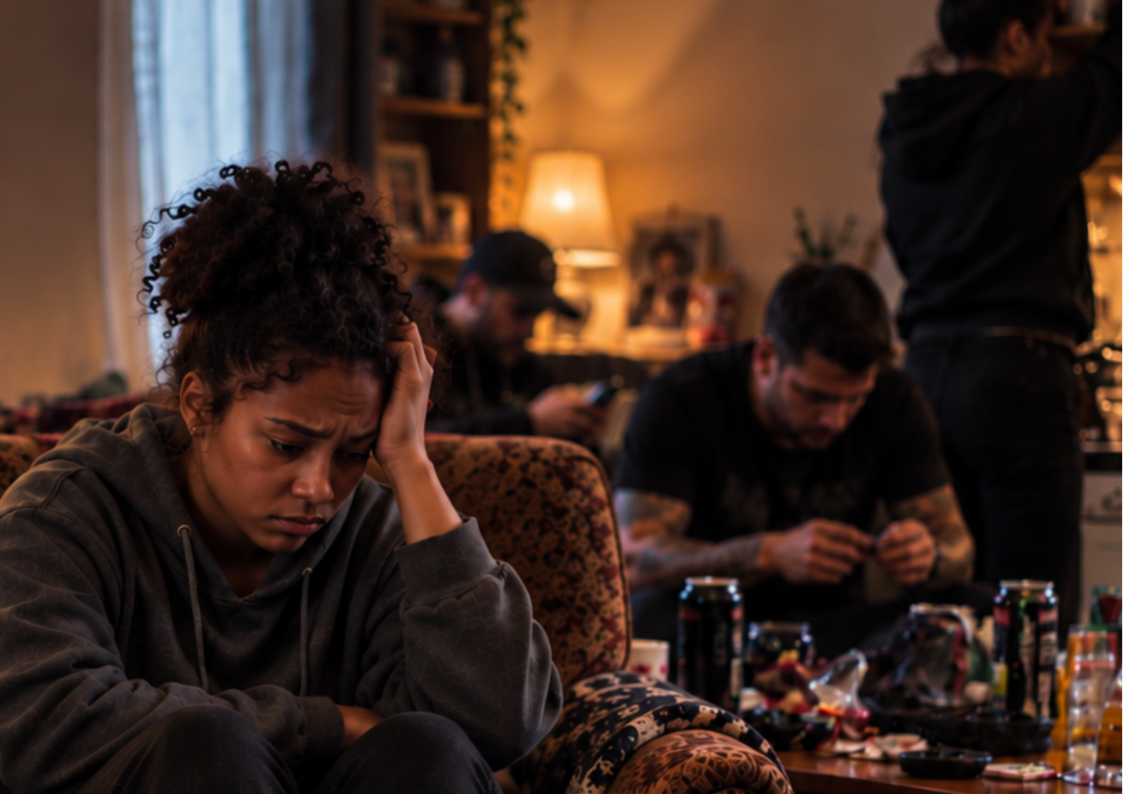
Cuckooing is when criminals take control of someone’s home and use it for criminal activity.
A person’s home may be taken over:
- to deal, store or take drugs
- for sexual offences or exploitation
- as a place for perpetrators to live
- to financially exploit the person living there
Cuckooing can develop gradually. Someone may initially offer the person friendship, money, drugs or help. Over time, they may use intimidation, coercion or other abusive behaviour to gain greater control over the person and their home.
The person being exploited may be frightened to tell anyone what is happening. They may also believe that the person exploiting them is a friend.
Cuckooing and modern slavery
Cuckooing is a form of adult criminal exploitation. In some circumstances, the exploitation involved may also be covered by the Modern Slavery Act 2015.
Cuckooing can also be connected to wider forms of exploitation. In county lines activity, for example, children and young people may be exploited to transport or supply drugs using properties controlled by others.
Find out more about the Independent Anti-Slavery Commissioner's work on related forms of exploitation:
CHILD TRAFFICKING & EXPLOITATION SEXUAL EXPLOITATION & TRAFFICKING HOUSING INSECURITY & EXPLOITATION
What does the law say about cuckooing
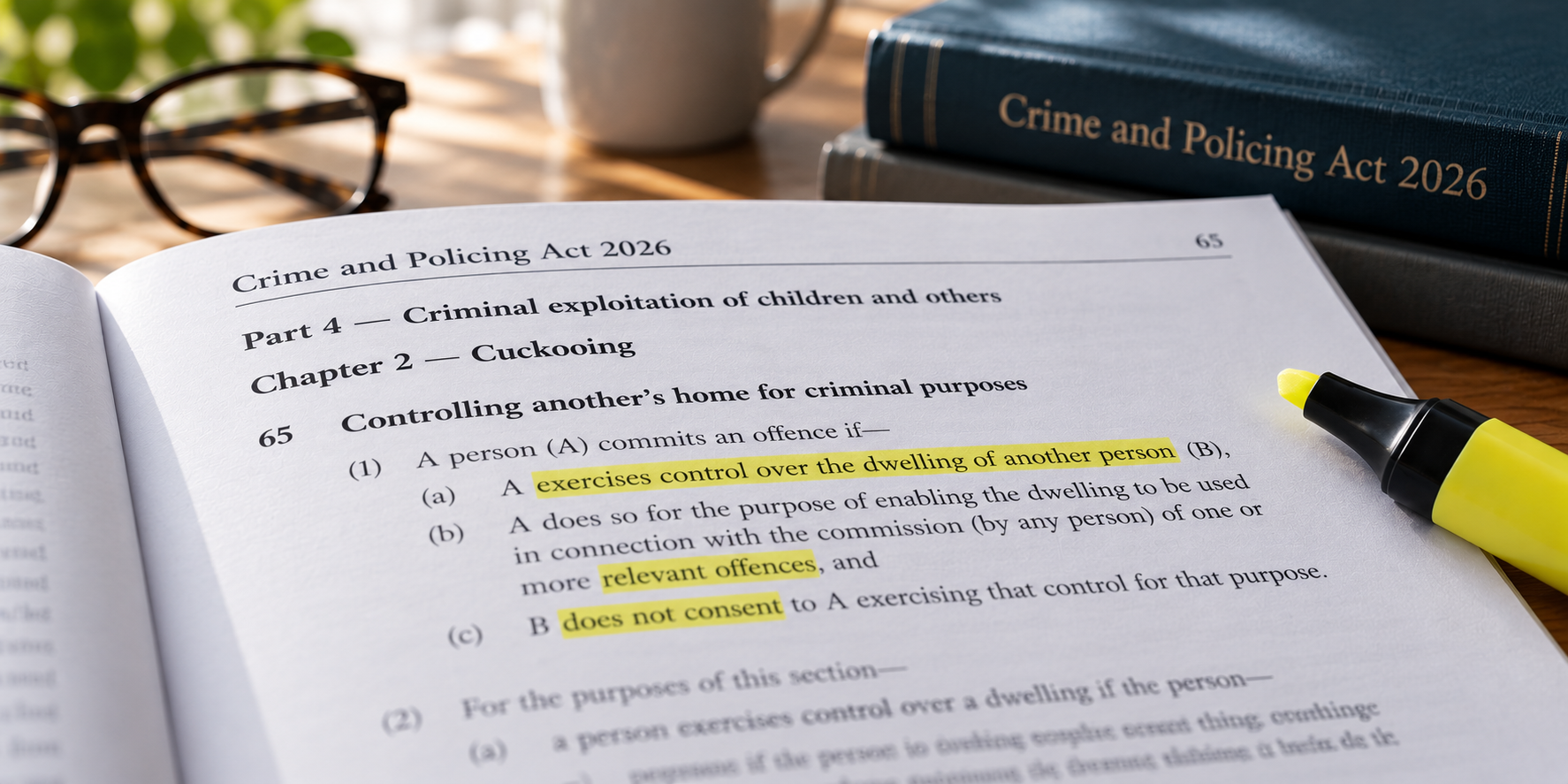
The Crime and Policing Act 2026 created a specific criminal offence to tackle cuckooing, also known as home takeover.
It is an offence to control another person’s home without their consent so that it can be used in connection with specified criminal activity. This includes offences involving drugs, sexual offences and offensive weapons.
Under the Act, a person cannot consent if they:
- are under 18
- do not have capacity to give consent
- have not been given enough information to make an informed decision
- have not given their consent freely
- have withdrawn their consent.
Consent may not have been freely given where coercion, deception or other abusive behaviour has been used.
The offence carries a maximum penalty on indictment of five years’ imprisonment, a fine, or both.
Who is at risk
Cuckooing can happen to anyone, but perpetrators may target people whose circumstances they believe they can exploit.
Circumstances perpetrators may exploit can include:
Know the signs
Cuckooing doesn’t always look like crime. You may simply notice that something has changed.
Changes in the person
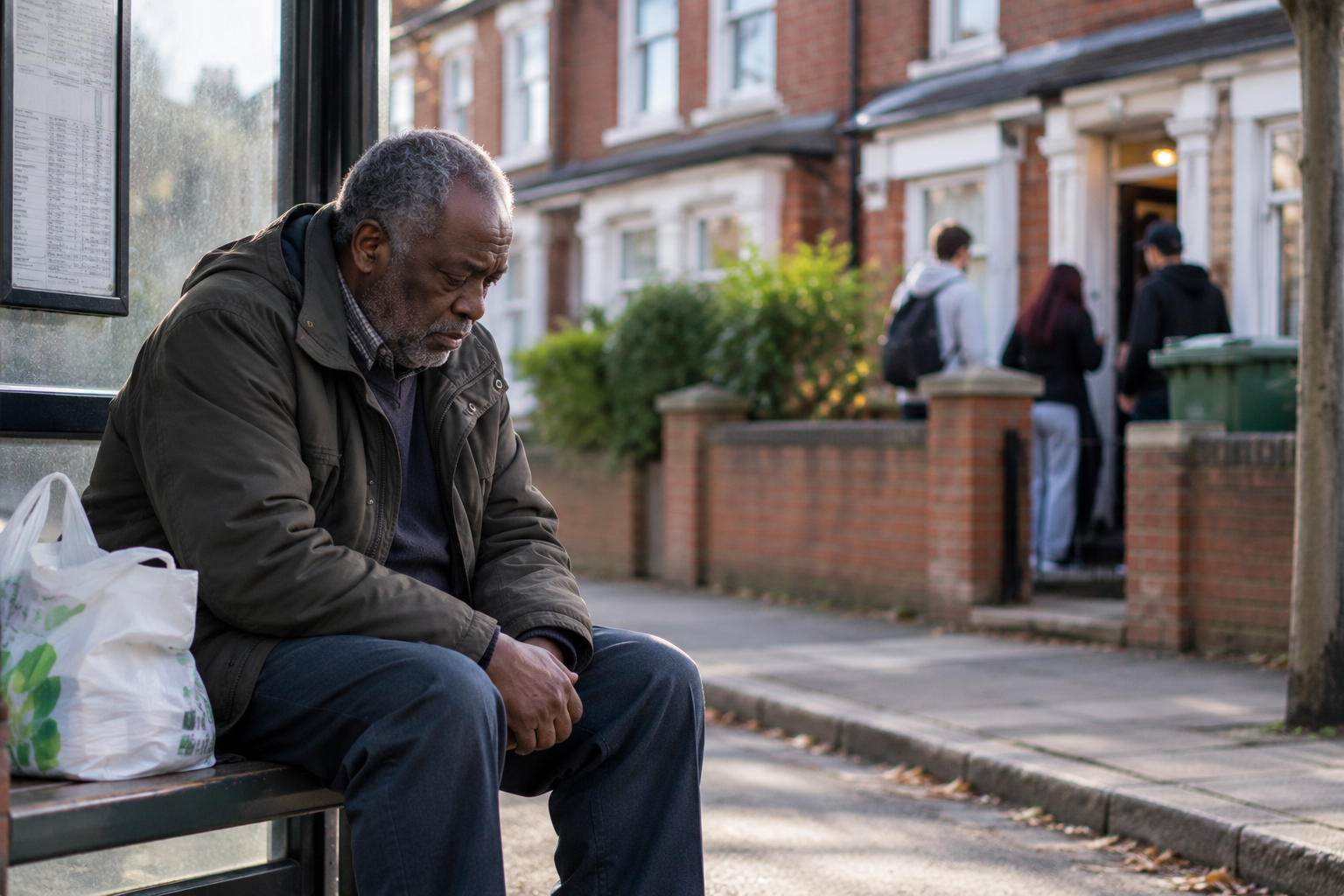
Possible signs might include:
- changes in their mood, behaviour or daily routine
- appearing frightened, anxious or withdrawn
- changes in their appearance
- appearing uncomfortable or reluctant to talk about people staying in or visiting their home
- spending less time in their own home.
Changes in or around the home
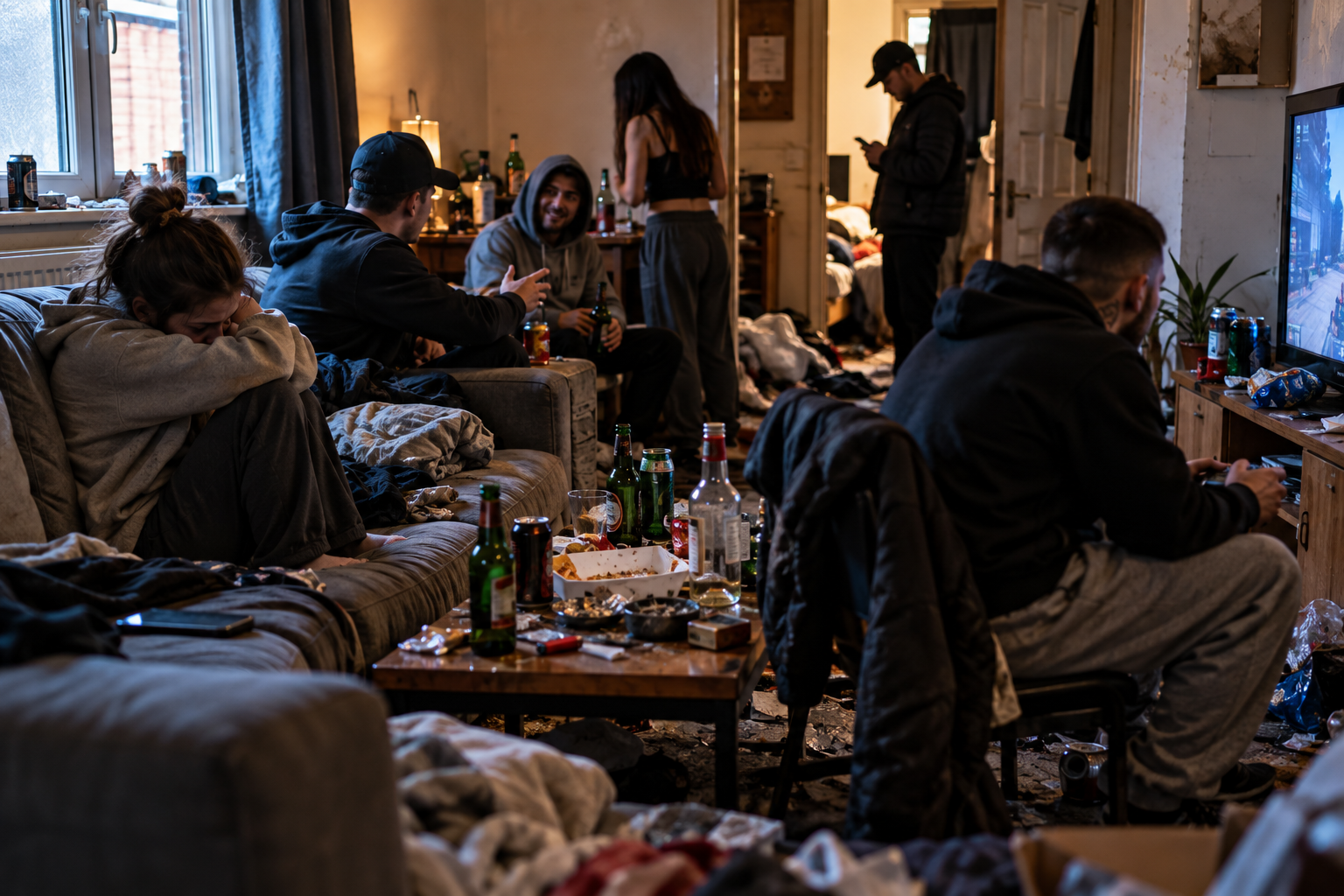
You might notice:
- unfamiliar people regularly entering and leaving
- more visitors than usual, including at unusual times
- unfamiliar vehicles outside
- increased antisocial behaviour
- damage to the property
- increased rubbish or drug-related items around the property.
One sign on its own does not necessarily mean someone is being exploited. Look for changes, patterns and signs that someone may have lost control of their home.
What should I do if I'm worried
You do not need to be certain that cuckooing is happening before seeking advice or reporting a concern.
If you're worried this is happening to you
If someone has taken control of your home, is intimidating or threatening you, or is making you feel unable to ask them to leave, you can ask for help.
If you are in immediate danger, call 999.
If it is not an emergency, you can contact the Modern Slavery & Exploitation Helpline on 0800 0121 700 for advice and support.
Get help and support
If you're worried about someone else
If there is an immediate danger to life, violence or threatened violence, or a crime is happening now, call 999. For a non-emergency concern, cuckooing can be reported to the police online or by calling 101.
Do not put yourself at risk or confront or approach someone you suspect may be exploiting another person. Police and local-authority cuckooing guidance explicitly advises people not to confront or approach suspected perpetrators.
Report a concern
If you're worried about someone through your work
If you think someone may be experiencing cuckooing through your work, follow your organisation's safeguarding procedures and consider whether concerns should be shared with the police or relevant safeguarding partners.
If someone is in immediate danger, call 999.
Hidden in plain sight
Cuckooing can be difficult to identify. Someone may appear to be allowing other people into their home when, in reality, they may be experiencing intimidation, coercion or exploitation.
During a week of coordinated police activity in March 2026, officers visited 683 suspected cuckooed properties across the country.
There is no centrally held national figure for the number of properties affected, so the full scale of cuckooing is difficult to establish.
Worried about what's happening in your home or someone else's
If someone is in immediate danger, call 999.
Modern Slavery & Exploitation Helpline
0800 0121 700
Phone lines are open 8am to 6pm, Monday to Sunday